

Blog
03 Mar 2026, 08:30 CET
Trends in AI Financing: How AI Is Reshaping Europe’s Digital Infrastructure
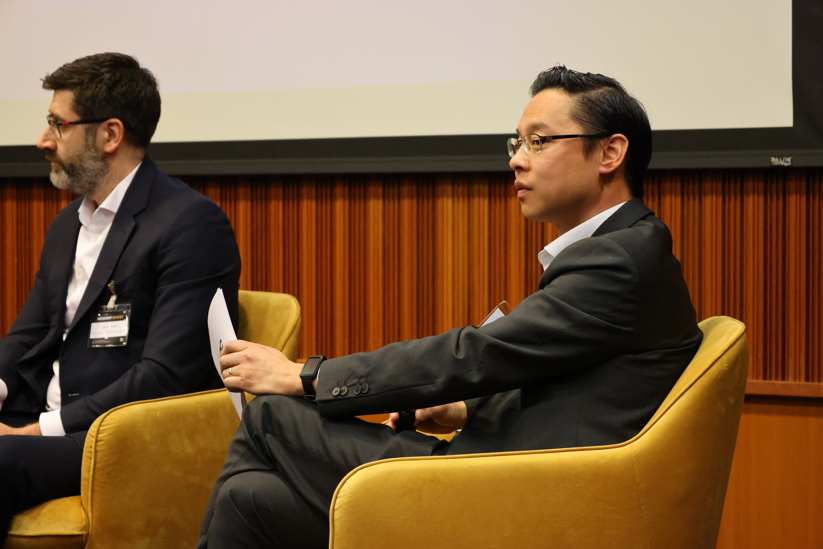
Our key takeaways from the KickStart Invest panel NIBC moderated on Trends in AI Financing:
Artificial intelligence is no longer an “emerging” technology. Across Europe, it is changing how digital infrastructure is planned, built and financed. Banks, investors, and data‑centre operators are all seeing the same shift: demand is rising fast, risks are changing, and the technical needs of AI are far more complex than what the industry is used to.
AI: Long‑term change or short‑term hype?
A key question in the market is whether AI’s rapid growth will last. Many signs point to long‑term change. AI workloads are moving out of testing environments and into real business operations. This shows that companies are using AI in meaningful ways - not just experimenting.
However, there are risks. Much of today’s AI demand comes from a small number of very large tech companies. This creates dependency and raises questions about long‑term stability.
From the Nordics, where high‑performance computing is already well established, operators report a continuous push for more power, faster build times, and higher density. But the biggest challenges for Europe are access to power, availability of skilled workers, and the ability to scale quickly.
Experts also warn that while AI is clearly a structural shift, expectations must stay realistic. Some AI companies would need extremely high revenue growth to justify their valuations. Technology may evolve quickly, but solid business fundamentals still matter.
There is also concern about too many new players trying to build large‑scale projects without the experience needed to deliver them. Cloud still drives most of the sector’s growth, but AI is reshaping where capital flows.
Designing for AI: a new level of complexity
AI is pushing data‑centre design into new territory.
Operators with experience in high‑density facilities explain that a 10 MW cloud site is nothing like a 100+ MW AI campus. AI requires liquid cooling, far higher rack densities, and very strict performance expectations. Even in regions with strong renewable power and natural cooling, this introduces new challenges the industry is still learning to manage. Will 70 kW rack densities become normal in FLAP D within two years? Probably not. Only specific cases will reach this level.
Across Europe, operators are using a mix of new builds and selective retrofits. Many older data centres were never built for AI workloads but can be upgraded carefully. At the same time, clients are asking for AI “test environments” of up to 150 kw rack density.
Investors face their own challenge: how to build for today’s needs while protecting long‑term asset value. AI requirements can change every few years, so flexibility has become essential. Instead of offering every type of service in one place, many companies now focus each facility on a clear, specific strategy.
Neo clouds, GPU services, and new risk factors
Another growing trend is the rise of neo‑cloud providers and GPU‑as‑a‑service companies. These firms are expanding fast because AI demand is outpacing traditional capacity.
But they also bring new risks. Many are young companies with short track records, concentrated customer bases, and high capital needs. Because of this, operators often require guarantees, phased contract commitments, or limits on how much capacity a single customer can take.
Many neo clouds fill gaps when hyperscalers cannot meet their own AI demand. This means some will stay - but not all will survive long‑term. Distinguishing between durable business models and short‑term GPU opportunism is becoming increasingly important for lenders and investors.
Financing trends: what can Europe learn from the U.S.?
Europe’s data‑centre financing model is still heavily bank‑driven, while the U.S. has long used capital‑markets tools such as asset‑backed securitization.
Some European operators now shape their client mix to appeal to lenders - focusing more on enterprise and government customers to reduce risk.
Others note that while the U.S. appears more advanced, it is still early in building multi‑gigawatt AI campuses.
Europe can learn from America’s market depth, but matching its speed would require major changes to energy regulation, tax structures, and planning rules.
Even so, capital‑markets financing is starting to grow in Europe. As more facilities move from construction to stabilized operation, securitization and private placements are likely to increase.
FLAP‑D or Nordics? AI needs both!
A key topic in Europe is where AI infrastructure should be built. The answer is now widely accepted: both regions play essential but different roles.
The Nordics are ideally suited for large AI training clusters, offering abundant renewable energy, natural cooling conditions, and significantly more available land.
FLAP‑D metros are ideally positioned for latency‑sensitive AI inference, providing close proximity to users, enterprise ecosystems, and major population centres.
AI is transforming Europe’s digital‑infrastructure landscape faster than any previous technology wave. Building the next generation of data centres will require coordinated action across operators, investors, policymakers, developers, and financial institutions.
The opportunity is enormous - but so are the risks. Long‑term success will depend on disciplined financing, careful client selection, and flexible, forward‑looking infrastructure design.
Europe is building the foundation of its AI future today. The choices made now will shape its digital capabilities for decades!
Questions? Please contact
-

-

Frederik de Haas van Dorsser
Digital Infrastructure Benelux
-

Lucas Ruland
Digital Infrastructure DACH region
-

Mark Shenton
Digital Infrastructure UK, Ireland & Southern Europe
-

Jan Willem van Roggen
Head of Commercial Real Estate & Digital Infrastructure


